
- EN
Select Language
- Search
Detailed search: You can do a detailed search by keyword, genre, time, area and tag.
- Share this page
Share this page
- FAVORITES
Main content starts here.
- Visit Tokyo |
- SPOT |
- Northern Tokyo |
- Ueno travel guide - from Ameyoko to Ueno Park |
- Follow the traces of 260 years of Tokugawa peace and the turmoil of the late Edo period —From Ueno to Hama-rikyu Gardens to Zojoji Temple
Updated: March 30, 2026
Follow the traces of 260 years of Tokugawa peace and the turmoil of the late Edo period —From Ueno to Hama-rikyu Gardens to Zojoji Temple
Your current location:
- Northern Tokyo
- Ueno
- Follow the traces of 260 years of Tokugawa peace and the turmoil of the late Edo period —From Ueno to Hama-rikyu Gardens to Zojoji Temple
The Edo shogunate, run by the Tokugawa family, ruled Japan for more than 260 years.
During that time, the Tokugawa family brought long-lasting stability and prosperity. However, that peace eventually gave way to the turmoil of the late Edo period.
Begin your journey in Ueno, an area closely connected to the Tokugawa family, then continue on to Hama-rikyu Gardens and Zojoji Temple, tracing the history of Tokugawa rule from its flourishing height to its final days.
Tips
- A walking route that offers something for everyone, from history buffs to casual tourists
- Experience the 260 years of the Edo Shogunate's glory and the turmoil of the Bakumatsu period all at once in Ueno
- Quietly soak in the shift from the Edo to Meiji eras at Hama-rikyu Gardens
(1) Begin with the statue of Saigo Takamori
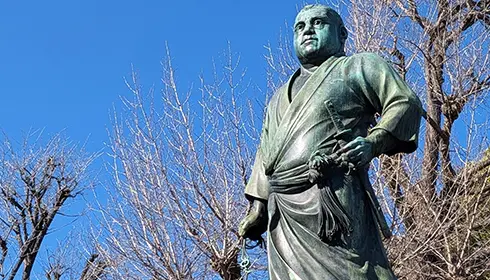
The statue of Saigo Takamori, leader of the new government troops during the Battle of Ueno, is a familiar meeting spot in Ueno today. In the Edo period, this area was part of the vast precincts of Kan’eiji Temple, a site deeply connected with the Tokugawa family and known as the “Mountain of Ueno.” Fierce battles erupted here at the end of the Edo period, marking the fall of 260 years of Tokugawa rule and the beginning of the Meiji period.
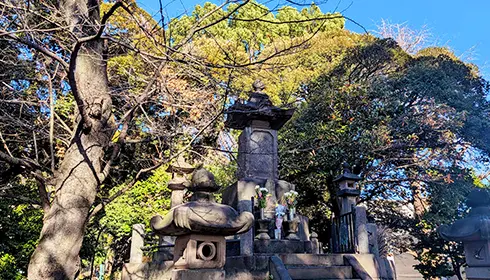
The burial site for the Shogitai, who fought at the Battle of Ueno as part of the Tokugawa loyalist forces, is located near Saigo’s statue.
(1 minutes on foot)
(2) Kiyomizu Kannon-do Hall
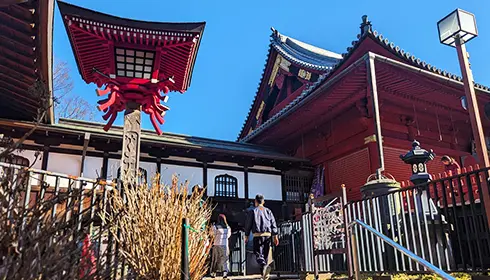
Kiyomizu Kannon-do Hall was constructed by the revered Buddhist monk Tenkai Daisojo in 1631 and modeled after Kiyomizu Temple in Kyoto. Originally a hall of Kan’eiji Temple built to guard the kimon (the northeast “ogre gate”) of Edo Castle, it was relocated to its current site in 1694. It is one of the oldest remaining structures on the Mountain of Ueno and is designated as a National Important Cultural Property.
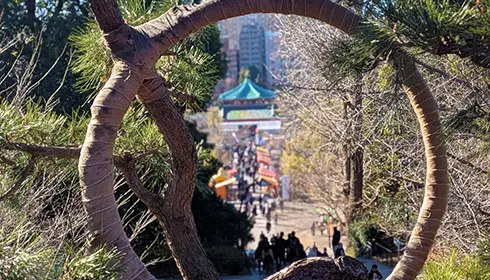
Tsuki no Matsu (Moon Pine) at Kiyomizu Kannon-do Hall. This pine tree was famously depicted in Utagawa Hiroshige’s One Hundred Famous Views of Edo. Although the original tree was destroyed in the early Meiji period, it was reconstructed in 2012. From the hall’s platform, you can look out over Bentendo Temple at Shinobazu-no-Ike Pond.
(5 minutes on foot)
(3) The Great Buddha of Ueno
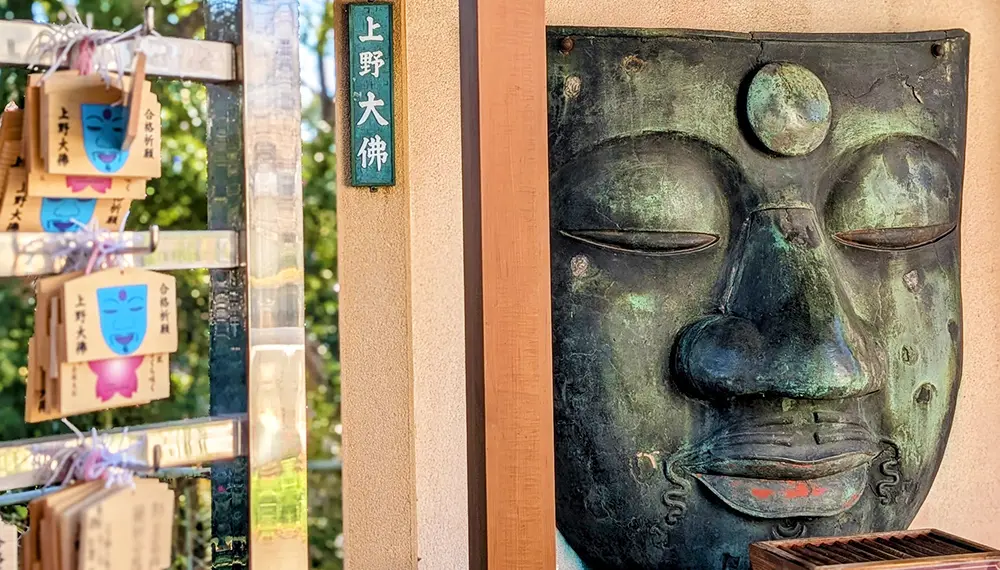
The Great Buddha of Ueno was originally constructed in 1631. Although the statue suffered repeated disasters, it was restored each time. During the Great Kanto Earthquake of 1923, the head fell from the body, and in World War II, the body was requisitioned for military use and lost. After enduring so many hardships, only the head remains today. Because the head can no longer fall, many students preparing for entrance exams visit the statue, praying that they too won’t fall short in their exams.
(5 minutes on foot)
(4) Ueno Toshogu Shrine
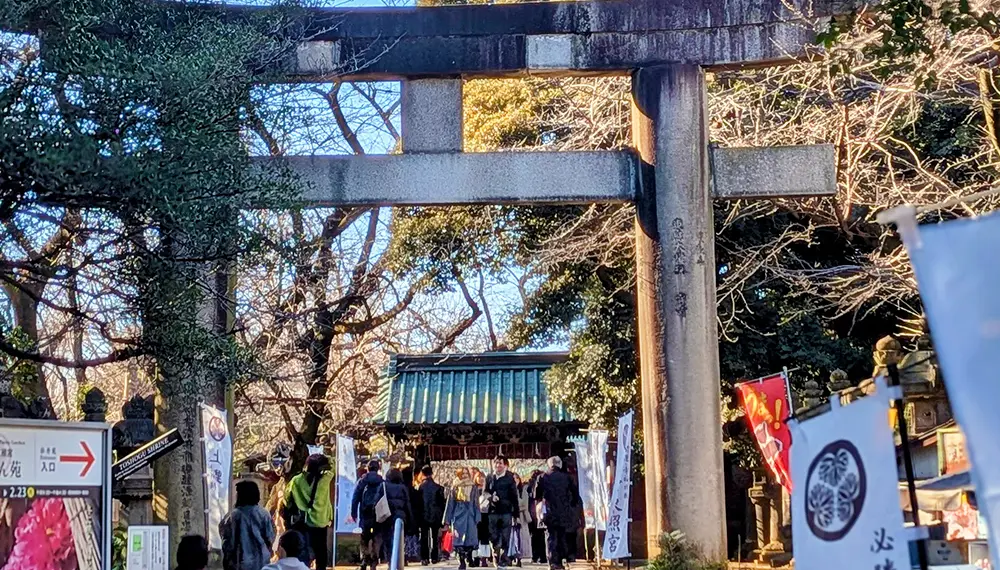
Ueno Toshogu Shrine, built in 1627, enshrines Tokugawa Ieyasu under his deified name Tosho Daigongen. Located within the precincts of Kan’eiji Temple and founded by the renowned monk Tenkai Sojo, the shrine served as a powerful symbol of Tokugawa authority.
The present Konjikiden (Golden Hall), Karamon (Chinese-style gate), and Sukibei (openwork fence) were built during the third shogun Iemitsu’s major reconstruction of the shrine in 1651. Their lavish designs, modeled after Nikko Toshogu Shrine, earned the designation as a National Important Cultural Property, valued as a rare example of early-Edo-period architecture.
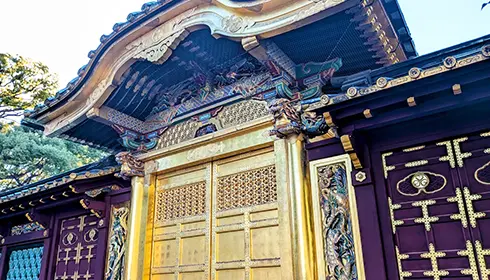 Karamon (Chinese-style gate) constructed in 1651. (National Important Cultural Property)
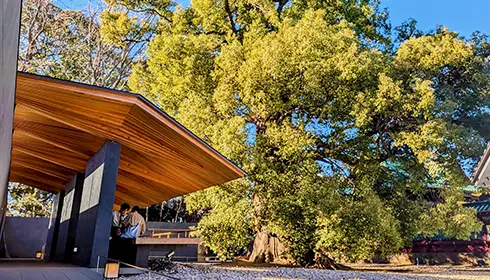 After paying the admission fee, you can go inside the fenced area and admire Konjikiden (Golden Hall) up close. The sacred camphor tree also stands there.
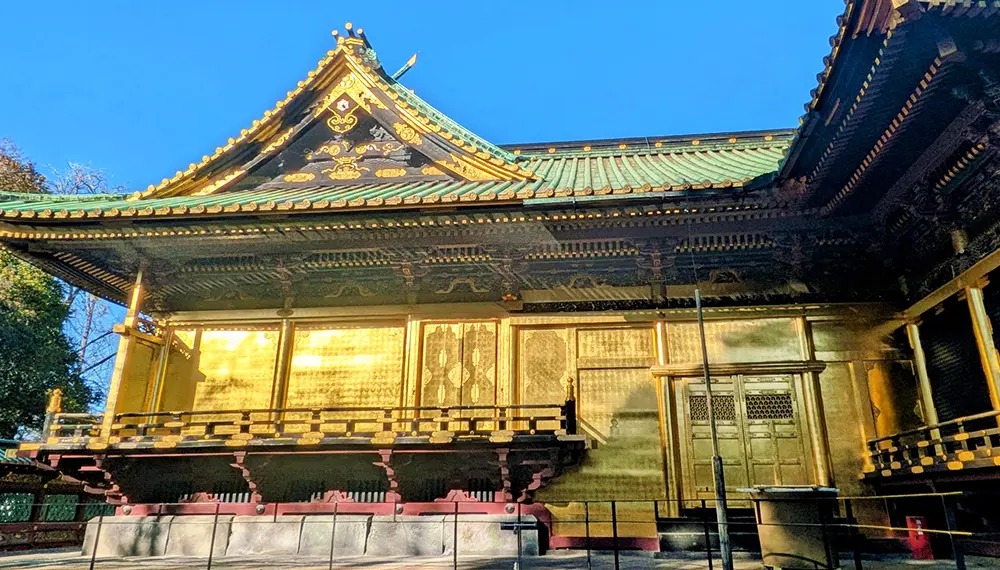
The shrine’s main structure. Built in 1651 and now designated a National Important Cultural Property. Covered in gold leaf, it is known as Konjikiden (Golden Hall).
(5 minutes on foot)
(5) Kompon Chudo at Kan’eiji Temple
The Kompon Chudo, the main hall of Kan’eiji Temple, suffered damage during the Battle of Ueno, yet it has remained a quiet place for prayer both then and now. Eigaku Soryu, a ceiling painting of twin dragons, was dedicated to the hall and opened to public in December 2025.
The Mausoleum of the Tokugawa shoguns, also located within the precincts of Kan’eiji Temple, is the resting place of six shoguns: Ietsuna (4th), Tsunayoshi (5th), Yoshimune (8th), Ieharu (10th), Ienari (11th), and Iesada (13th).
Kompon Chudo and Eigaku Soryu at Kan’eiji Temple
(Approx. 45 minutes total walk + train + walk)
(6) Hama-rikyu Gardens
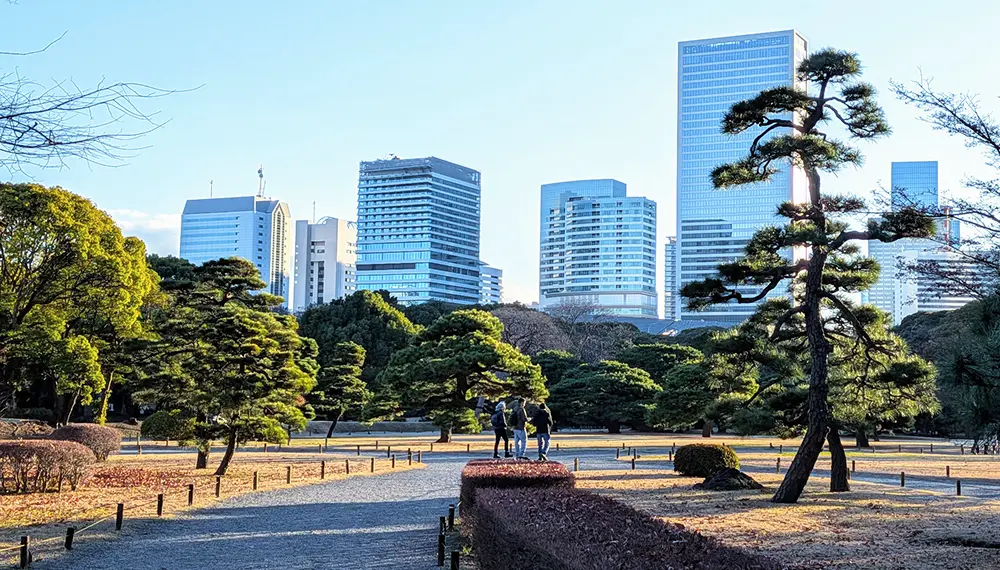
Hama-rikyu Gardens were created during the Edo period as a villa of the Tokugawa shogunate. The duck hunting grounds once used by the shoguns, along with a restored teahouse, still remain today.
After the Taisei Hokan (the restoration of imperial rule) at the end of the Edo period, this was also the place where the shogun came ashore from a shogunate ship. Standing here in the gentle sea breeze, you can sense the transition of Japan from the Edo period to the Meiji era.
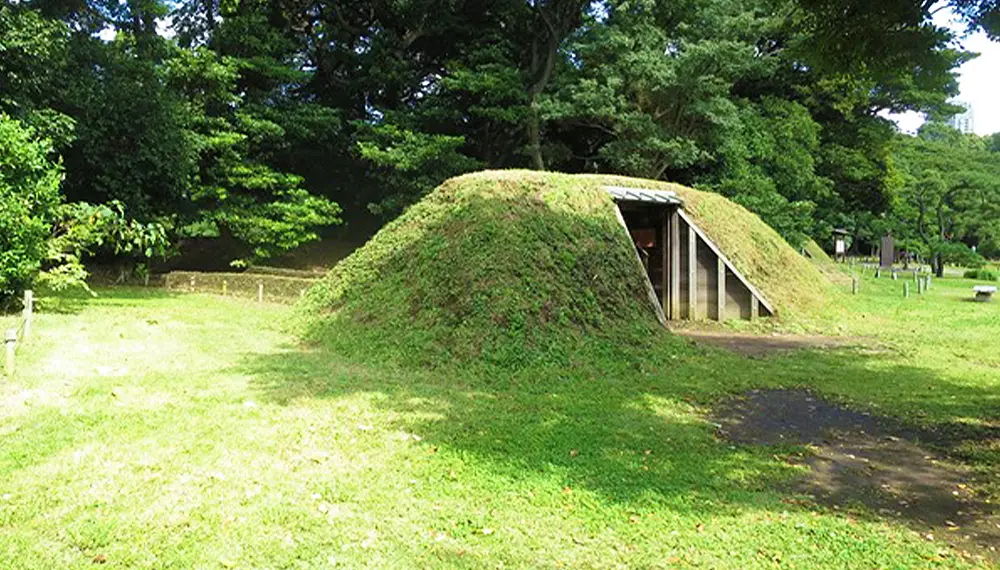
Existing duck hunting ground (Konozo). From inside this structure, hunters tapped a wooden mallet to lure ducks closer and hunted them using trained hawks.
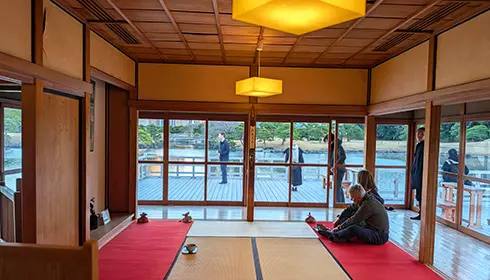 During breaks from hunting, shoguns relaxed here with tea and meals, enjoying the view.
 Enjoy matcha and Japanese confectionery (for a fee) at Nakajima-no-Ochaya, a teahouse restored from the original structure built in 1707.
(Approx. 35 minutes total walk + train + walk)
(7) Continue on to Zojoji Temple for a deeper look into the history
Zojoji Temple served as the Tokugawa family temple, supported by Ieyasu. Six Tokugawa shoguns—Hidetada (2nd), Ienobu (6th), Ietsugu (7th), Ieshige (9th), Ieyoshi (12th), and Iemochi (14th)—are interred in the family graveyard here.
The tombs of their wives and concubines are also located here, including that of Seikan’in Kazunomiya, the wife of Iemochi and known as a tragic princess, as well as others connected to the Tokugawa family.
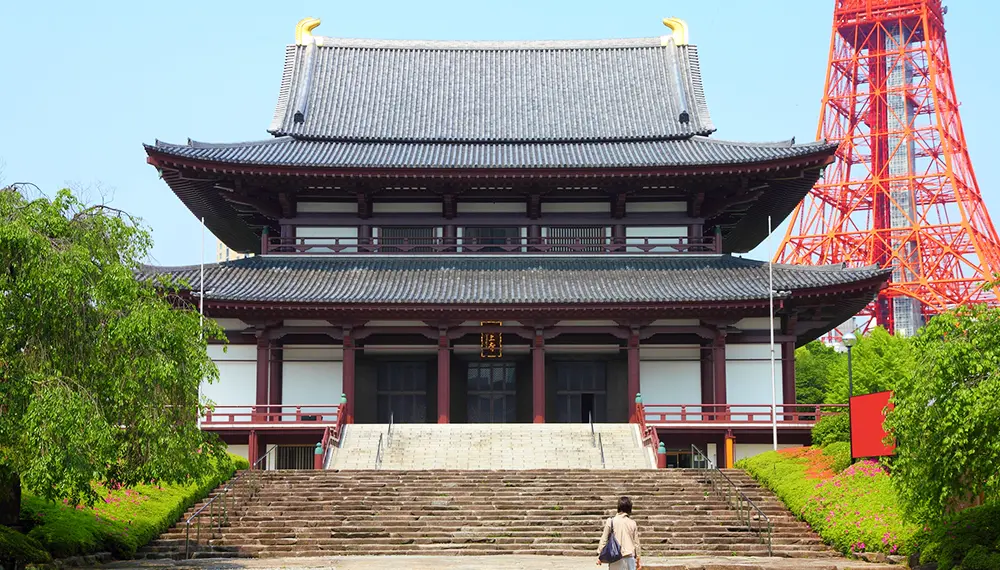
photo:iStock
Zojoji Temple
From Ueno to Hama-rikyu Gardens, then to Zojoji Temple—Following this route lets you trace the history of the Tokugawa family and feel the rise and fall of their era more vividly.


Copyright © Tokyo Convention & Visitors Bureau. All rights reserved.